Google’s water pledge gives AI data centers a harder test: prove the local math
Google wants its new water framework to become an industry standard. The harder question is whether communities can finally see enough local data to judge the bargain.
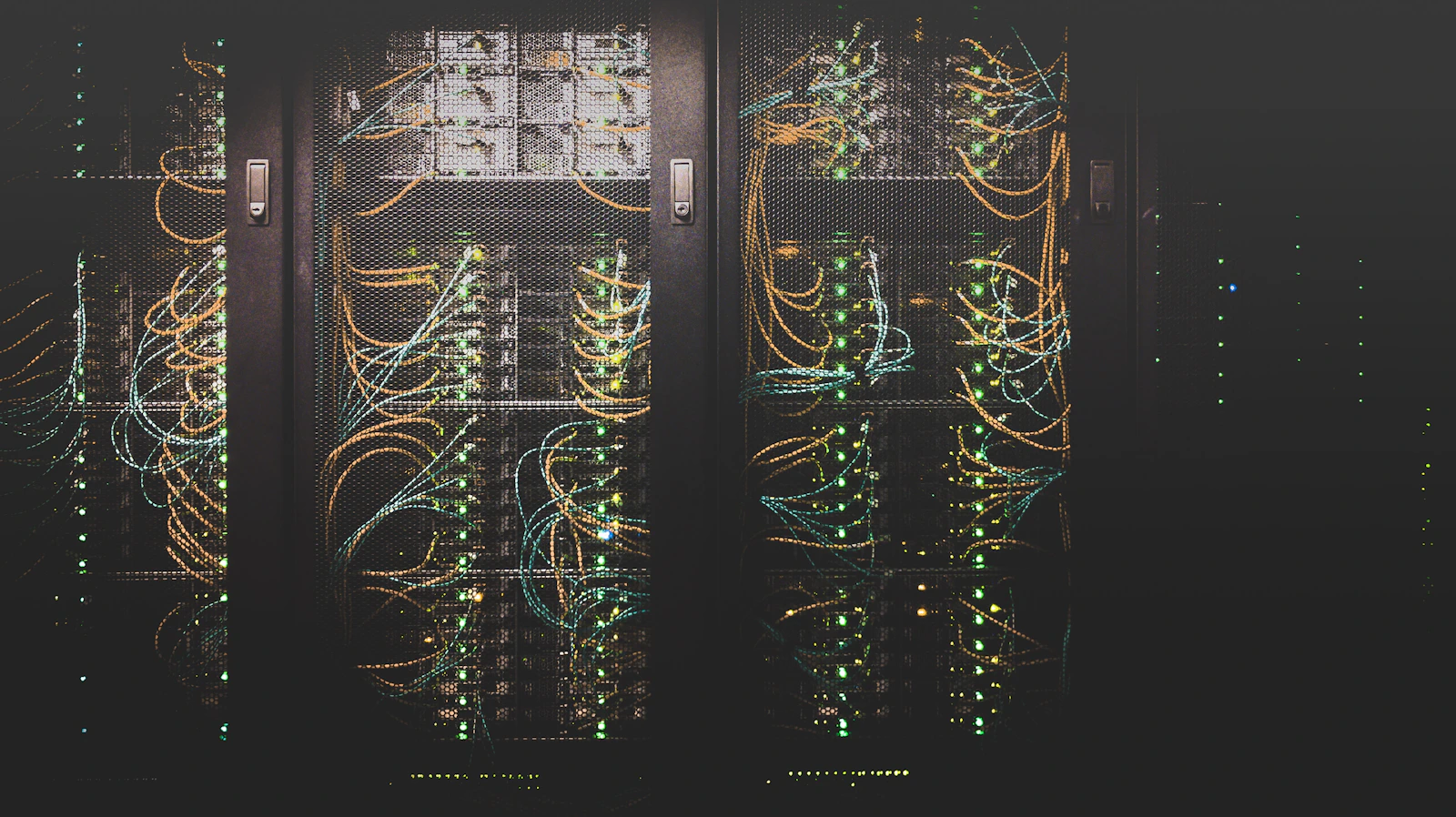
Google has put a number on the table, and it is not small: more than $500 million committed to water, wastewater and reuse infrastructure in communities where it operates or builds data centers. The company is also promising to replenish more water than it consumes at its sites by 2030, avoid freshwater cooling where local watersheds are at high risk, and keep disclosing annual water use.
That is the official pitch. The more interesting story is the one sitting underneath it. The AI boom has turned water into a permitting issue, a trust issue and, increasingly, a political issue. Communities are no longer asking only whether a new data center will bring jobs. They are asking what happens to the aquifer, the utility bill, the creek behind the site and the public documents they are allowed to see before the deal is done.
Google's June 3 water framework is an attempt to answer that anxiety before it hardens into default opposition. It is also a recognition that the next phase of AI infrastructure will not be won only with chips, land and power contracts. It will be won, or delayed, in the local water ledger.
Our goal is to minimize our local impacts so that our growth does not come at the expense of the communities we call home.
Google water stewardship announcement, June 3, 2026
The new promise is broad. The hard part is local.
Google says it now has 165 water stewardship projects across 97 watersheds and that it replenished more than 7 billion gallons in 2025, roughly equivalent to the annual water use of 70,000 average U.S. households. The company also says it has committed more than $500 million to water, wastewater and reuse infrastructure, including work with local utilities and public agencies.
Those are serious numbers, and they matter. Replacing leaking pipes, expanding reclaimed-water systems and restoring wetlands can make a real difference in places where utilities have been asked to support 21st-century digital infrastructure with 20th-century public works budgets.
But averages are where water arguments often go to hide. A gallon replenished in one watershed is not the same as a gallon consumed in another. A wetland project can improve resilience; it does not automatically answer whether a specific data center should use evaporative cooling in a stressed basin. Communities know this intuitively. They do not live in global sustainability reports. They live next to the facility.
Google's water math is improving, but locality is the test
Why water became AI's quiet bottleneck
Data centers use water because servers throw off heat. Evaporative cooling can reduce electricity demand and carbon emissions compared with some air-based designs, which is why the technology has been attractive in certain climates. But the tradeoff is not abstract. Cooling choices can shift pressure from the grid to the watershed.
Google acknowledges that tradeoff. Its own data-center sustainability material says water cooling can improve energy efficiency in some geographies, while its new framework says the company will use a data-driven watershed assessment before choosing freshwater cooling for new sites. If a water source is at high risk, Google says it will choose air cooling or recycled water.
That sounds sensible, but the sentence that matters most is not the one about technology. It is the one about disclosure. A community cannot evaluate responsible water use
if the actual water source, cooling design, forecast demand and mitigation plan arrive late, partially or under confidentiality claims.
This is where industry promises have often underperformed. Data-center developers like to talk about efficiency; neighbors want site-specific numbers. The two are not the same.
What Google is really asking communities to believe
Google is asking local governments to believe five things at once: that water use will be measured, that replenishment will be meaningful, that utilities will receive real support, that highly stressed watersheds will be protected, and that alternative sources such as reclaimed wastewater will become routine rather than exceptional.
| Google commitment | What readers should ask next |
|---|---|
| Replenish more water than it consumes at its sites by 2030 | Will the replenishment happen in the same watershed where the water is consumed, and on what timeline? |
| Fund water and wastewater infrastructure | Does the money expand public resilience, or mainly make a data-center project easier to approve? |
| Avoid water cooling in at-risk watersheds | Who defines risk, and will the assessment be public before permits are granted? |
| Use reclaimed water and alternatives | Will reclaimed systems be built at scale, and will they compete with other local reuse priorities? |
| Disclose annual water use | Will reporting be site-specific enough for local planning, or too aggregated to be useful? |
The questions are not hostile. They are the basic due diligence a town would apply to any large industrial water user. AI does not get to skip that step because the product feels futuristic.
The transparency gap is no longer a side issue
Recent research has sharpened the point. A May 2026 report from Next 10 and researchers at Santa Clara University found that California's expanding data-center industry increasingly intersects with areas facing water scarcity and environmental vulnerability. The report also highlighted a familiar obstacle: for the vast majority of mapped facilities, publicly accessible environmental planning documents, cooling-system details and information on water sources were missing.
UC Berkeley's Center for Law, Energy and the Environment made a similar governance point in a February 2026 policy report: policymakers and water managers still have too little visibility into how much water data centers use, where impacts may fall and what rules would manage those impacts before conflict erupts.
That is the unglamorous heart of the story. The AI industry wants to move at chip-cycle speed. Water planning moves at watershed speed. One measures progress in quarters; the other measures mistakes in decades.
Air cooling is not a magic escape hatch
Some readers will ask the obvious question: why not make every data center air cooled? Sometimes that will be the right answer. Google says it already chooses air cooling or recycled water when a local water source is at high risk.
But water and electricity are often traded against each other. Air cooling can use more power in some conditions, while water cooling can lower energy demand but increase local water pressure. A responsible decision is not simply choosing the option with the better press release. It means publishing the tradeoff and letting local officials evaluate it against their grid, climate, utility capacity and drought exposure.
The best host-community agreements will not ask residents to accept a slogan. They will show a model.
What a stronger local data-center deal should include
If Google's framework becomes an industry standard, it should be judged by whether it changes what communities can demand before approval. A serious deal would include:
- Site-specific annual water forecasts, including peak seasonal use and whether water comes from potable, recycled, surface or groundwater sources.
- A cooling-technology explanation written for the public, not just engineers and utility lawyers.
- Watershed-level replenishment accounting that distinguishes nearby benefits from global offsets.
- Public infrastructure commitments with timelines, responsible parties and maintenance obligations.
- Emergency limits for drought, heat waves, utility restrictions and local water-quality problems.
- Independent reporting so the same company seeking approval is not the only source measuring compliance.
Where the local water questions concentrate
The AI boom needs a public ledger
Google deserves credit for putting water use more directly in the open. Its 2030 replenishment goal, annual disclosures and infrastructure commitments are more substantive than the vague environmental language that often surrounds large industrial projects.
Still, the bar is rising because the stakes are rising. AI infrastructure is no longer a remote cloud abstraction. It has a footprint: substations, transmission corridors, backup generators, cooling systems, utility negotiations and public works projects that someone has to pay for and maintain.
The next question is whether the rest of the industry follows Google toward more disclosure, or borrows the marketing language while keeping the local numbers difficult to find. That distinction matters. Communities are not anti-technology because they ask for a water budget. They are doing what good communities do when a powerful new industry arrives: they are checking the plumbing.
If AI is going to become part of everyday life, the infrastructure behind it has to become legible to everyday people. Water is a good place to start because it refuses abstraction. You can call it compute, cloud or acceleration. The watershed still has to balance.
Read Next
Related Stories
Aaron Judge’s rib fracture forces the Yankees into a different kind of summer
The Yankees say Aaron Judge will be reimaged in four to six weeks, but the real question is how New York protects its season while its captain rests.

Andes virus cruise-ship outbreak: why CDC says public risk remains low
CDC says the Andes virus outbreak tied to the M/V Hondius remains a low risk for the general U.S. public, while exposed passengers continue 42-day monitoring.

Senate passes border-enforcement bill, but Trump payout fight is not over
The Senate approved roughly $70 billion for ICE and Border Patrol after Republican infighting over a separate Trump settlement fund. The funding question moved forward, but the accountability fight did not end.
Comments
Reader comments are moderated. Editor responses are highlighted after review.